Greater Core Stone: Critical Crust Placement Anomalies & High Hazard Mitigation
This report details critical anomalies in Greater Core Stone Crust placement during Core Corruption events, particularly at elevated Hazard levels. It provides actionable strategies to mitigate mission failure due to inaccessible or poorly positioned targets, ensuring continued operational success.
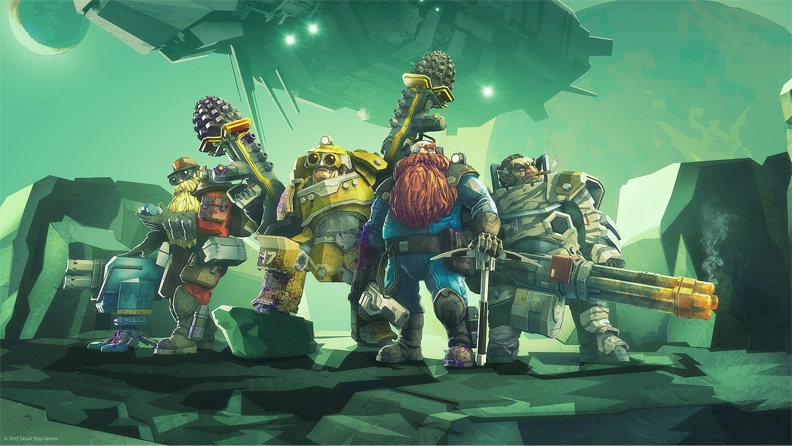
Combat Summary
- Target/Topic: Greater Core Stone Crust Placement Anomalies during Core Corruption Warning Event.
- Recommended Hazard Level: Hazard 4-5+ (Impact is significantly amplified at higher difficulty tiers due to increased attrition and limited response windows).
- Loadout/Gear Focus: High mobility traversal tools (Drills, Grappling Hook, Zipline Launcher), Area Denial/Crowd Control (Turrets, persistent AoE), High Single Target Damage for Corespawn elimination, and robust defensive options (Shield Generator).
Operational Briefing: The Core Corruption Warning
The introduction of the ‘Core Corruption’ warning through the Rogue Core event presents a dynamic and challenging environmental variable to standard deep dives. Its inherent concept—a critical environmental anomaly impacting Hoxxes’ ecosystem—is commendable. However, frontline intelligence reports a critical flaw in the Greater Core Stone engagement protocol: the inconsistent and often indefensible placement of its vulnerable Core Stone Crusts. This defect, while seemingly minor, escalates rapidly into a mission-critical failure point on higher Hazard levels.
Critical Flaw: Anomalous Core Stone Crust Placement
Recent mission reports, notably a Hazard 5 deep dive, highlight a severe tactical vulnerability. During the second engagement phase with the Greater Core Stone, a vital Core Stone Crust was observed spawning entirely isolated from the primary combat arena. This separation rendered pre-established traversal lines (e.g., ziplines, platforms) obsolete. Miners were forced into frantic, uncoordinated tunneling attempts, compounded by relentless Corespawn pressure. Identification of the Crust’s exact location was only achieved through environmental glitching, revealing its position behind impenetrable terrain.
This flaw is not merely an inconvenience; it represents a fundamental breakdown in event design that forces undue resource expenditure, elevates attrition rates, and precipitates mission failure. Unlike the Korlok Tyrant-Weed, where multiple healing pods exist and not all are critical for success, the Core Stone Crusts are absolute objectives. Failure to access and destroy them results in inevitable operational collapse.
Observed Spawning Patterns & Environmental Factors
- Geographic Isolation: Crusts manifest in areas geographically distinct from the main engagement zone, often requiring extensive drilling or precise, high-risk traversal to reach.
- Obscured Visibility: Locations can be deliberately hidden behind rock formations or within extremely confined, unstable pockets of the environment.
- Restricted Combat Arenas: The Greater Core Stone itself can generate in uncharacteristically small caverns, severely limiting miner maneuverability and evasion potential against swarm pressure.
- Relentless Attrition: The Corespawn threat persists indefinitely and does not despawn or timeout when miners disengage or reposition, turning any prolonged search for a Crust into a fatal war of attrition.
High Hazard Mitigation Strategies
Effective counter-tactics against this flaw demand rigorous team coordination, proactive reconnaissance, and optimized class-specific responses.
Pre-Engagement Reconnaissance & Positioning
Prior to activating the Greater Core Stone, a thorough environmental sweep of the immediate vicinity is paramount. Identify potential hidden alcoves, distant platforms, or any anomalous geological formations that could conceal a Crust. Establish redundant traversal paths (e.g., multiple zipline angles, drill paths, platform networks) to anticipate problematic spawns.
Class-Specific Tactical Response
- Driller: Your drills are the primary solution. Upon Crust identification, establish a direct, rapid tunnel path, irrespective of Corespawn density. Coordinate with Gunners for shield deployment and Engineers for cover platforms. Drills must be treated as a priority resource for this specific emergency.
- Engineer: Deploy platforms for vertical access to difficult-to-reach Crusts or to provide cover for Driller/Gunner actions. Utilize turrets for localized area denial, suppressing Corespawn that might impede drilling or traversal. Repellant Additive platforms can manipulate Corespawn movement, guiding them away from critical pathfinding.
- Gunner: Zipline Launcher is crucial for establishing long-range traversal, but its utility is diminished by isolated Crusts. Prioritize Corespawn suppression to clear paths for other classes. The Shield Generator is indispensable for protecting a drilling Driller, covering platform placement, or providing a critical revive window when accessing a problematic Crust.
- Scout: Superior mobility and flaregun are essential. Immediately prioritize illuminating the entire engagement area to locate Crusts early. Utilize the Grappling Hook for rapid direct access if a path exists, or for quick retrieval of downed teammates attempting to reach an isolated Crust. Target high-threat Corespawn to alleviate pressure.
Resource Management & Retreat Protocols
Expect significantly higher resource expenditure than standard Core Stone engagements. Ammo, health, and shield recharges must be managed with extreme prejudice. While tactical retreats are often viable, the Core Corruption event’s relentless Corespawn generation means disengaging from the primary combat zone is rarely a clean break. Sustained pressure without a clear objective path rapidly depletes resources and leads to mission failure. The goal is rapid Crust elimination, not prolonged engagement with Corespawns.
Collective Priority: Core Stone Crust Elimination
Once a Core Stone Crust is located, it becomes the absolute mission priority. All other objectives, including general Corespawn elimination, are secondary until that Crust is destroyed. Direct all available fire and utility towards clearing a path and destroying the target. Team coordination and explicit callouts are non-negotiable for success.
Post-Mission Analysis & Recommendations
The Core Corruption warning offers valuable thematic depth, but its current Crust spawning logic introduces an unacceptable level of random mission-ending circumstances. To ensure operational integrity and maintain the challenging but fair gameplay standard expected by Deep Rock Galactic miners, the following adjustments are recommended:
- Crust Proximity Enforcement: Implement parameters that guarantee Core Stone Crusts spawn within reasonable traversal distance or direct line of sight from the Greater Core Stone’s primary arena.
- Environmental Destruction Trigger: Consider a mechanism where inaccessible Crusts, after a timed delay or failed access attempts, trigger a localized environmental destruction event, making them accessible.
- Room Generation Review: Re-evaluate the algorithm for Greater Core Stone cavern generation to ensure sufficient space for maneuverability and combat engagement.
- Corespawn Sustainability Review: Examine the Corespawn threat when zipline-based traversal is not viable. Adjust Corespawn numbers, health, or damage output in scenarios where miners are forced into ground-level or tunneled engagements, to prevent overwhelming attrition.
Rock and Stone, Management. This issue demands immediate attention for the continued success of Deep Rock Galactic operations.